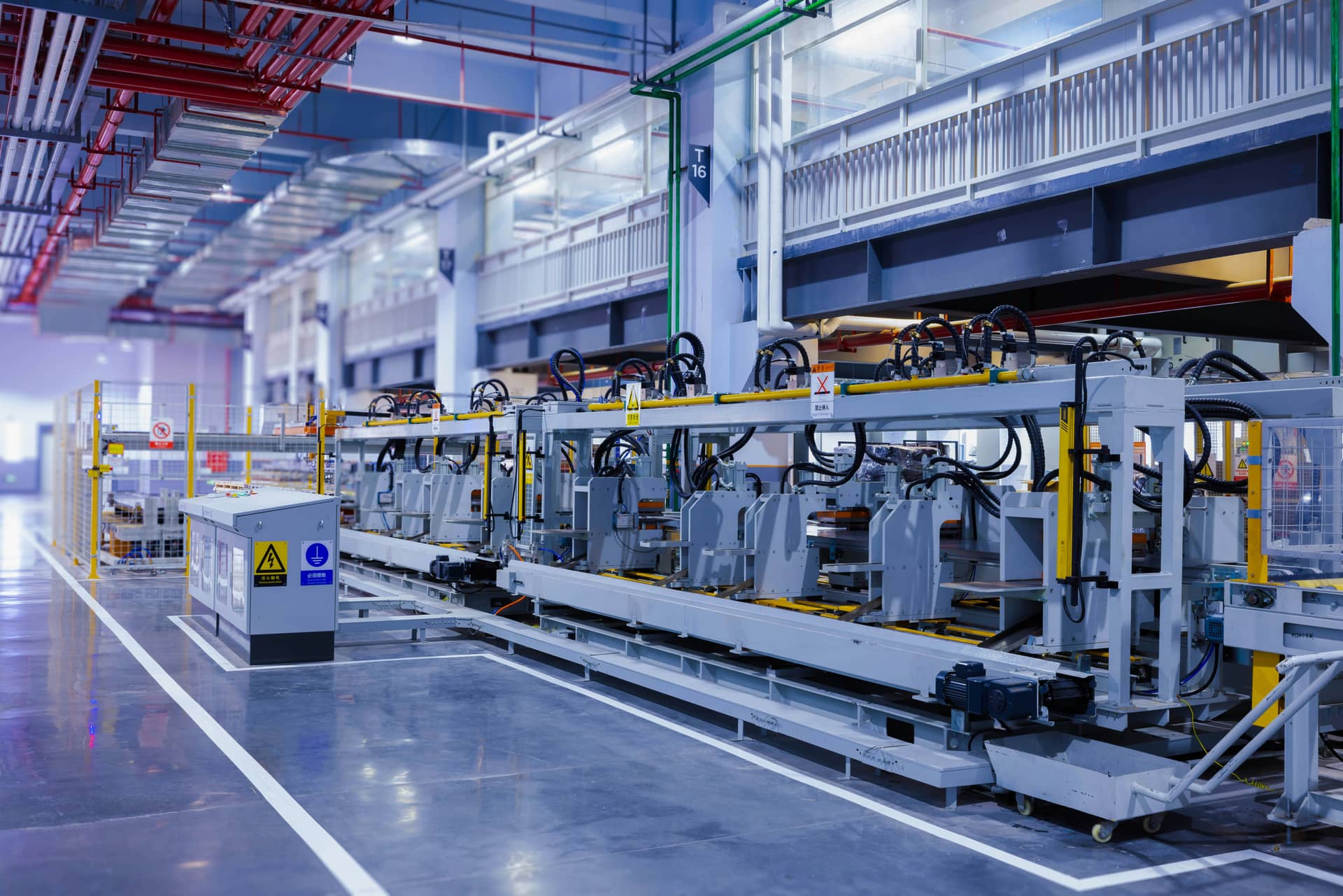
Manufacturing software fails when the OT/IT boundary is treated as a data problem instead of an architecture problem.
Most industrial software projects fail not because the analytics platform was wrong, but because the edge layer, protocol handling, and network segmentation were an afterthought. We start there.
OT/IT Integration as an Architecture Problem, Not an Afterthought
Connecting PLCs, SCADA, and CNC machines to cloud analytics requires an edge computing layer that handles protocol translation, local buffering, and secure upward data flow. We design this layer first — not as a connector bolted onto an IT platform.
Industrial Cybersecurity Built In
We follow IEC 62443 and NIST frameworks for industrial control systems — network segmentation between OT and IT zones, encrypted communications, and anomaly monitoring — because a compromised shop floor network is an operational risk, not just an IT incident.
Phased Rollout for Zero-Disruption Deployment
Manufacturing systems can't go down for a cutover. We deploy pilot-first on non-critical lines, validate with real production data, then roll out to full operations — so new systems are proven before they touch your highest-value assets.
GCP-Native Data Pipelines for Industrial Scale
As a Google Cloud Partner, we build Pub/Sub and BigQuery pipelines that ingest high-frequency sensor data, run ML inference at the edge, and surface OEE analytics to operations teams in near real-time — without the infrastructure overhead of on-premise historian servers.
What Modern Manufacturing Technology Delivers
The outcomes we engineer for
These are the benchmarks well-built industrial platforms consistently move — and what we design toward on every engagement.
40–60%
Reduction in Unplanned Downtime via Predictive Maintenance
0%+
Defect Detection Accuracy with Computer Vision
20–30%
OEE Improvement from MES and Analytics
0%
Our Client Retention Rate
Our Clients
What We Build
Reference architectures for manufacturing technology
These illustrate the systems we design and engineer — the technical approach, the integration patterns, and the operational outcomes they're built to deliver.
Predictive Maintenance
IIoT Predictive Maintenance Platform
An edge-first predictive maintenance system — vibration, temperature, and pressure sensors connected via OPC-UA and MQTT to an edge computing layer, with ML failure prediction models running locally and aggregated health dashboards served from GCP. Automated work order creation in the CMMS when thresholds are breached.
A computer vision inspection system with high-speed cameras, edge AI inference via TensorFlow Lite or Vertex AI Edge, real-time rejection and diversion control, defect classification at 99%+ accuracy, and a quality trend dashboard with SPC charts — integrated into the production line without stopping for rework.
A cloud-native MES on GCP with bi-directional SAP/Oracle ERP integration — production order tracking from release to completion, live OEE calculation per machine, electronic work instructions, quality checkpoints, and labor tracking. Deployed pilot-first on non-critical lines before full rollout.
A BigQuery-backed supply chain platform with ML demand forecasting from production and sales signals, a supplier collaboration portal, real-time inventory visibility across locations, automated reorder point calculation, and supplier performance scorecards — integrated with the ERP for purchase order automation.
We audit your production processes, existing systems (SCADA, ERP, MES), and connectivity landscape to define the right solution scope.
02
OT/IT Architecture Design
Week 2–3
Our architects design the integration blueprint — edge computing layers, data pipelines, security zones, and cloud connectivity plan.
03
Phased Development & Integration
Week 4–16
Two-week sprints with pilot deployments on non-critical lines first. Validate with real production data before rolling out to full operations.
04
Validation & Testing
Week 14–18
Factory acceptance testing, cybersecurity assessment, and performance validation under real production conditions.
05
Full Rollout & Support
Week 18–20
Phased rollout across all lines and facilities. Operator training, maintenance team handover, and 90-day hypercare support.
Use Cases
How manufacturers use our technology
From predictive maintenance to AI quality control, see the specific problems we solve for manufacturing businesses.
Predictive Maintenance
Predict equipment failures before they happen
Connect IoT sensors to ML models that analyze machine health data in real time, predicting failures weeks in advance so maintenance can be planned during scheduled downtime.
Vibration, temperature, and pressure sensor integration
ML models trained on historical failure data
Failure prediction with 2–4 week advance warning
Automated work order creation in your CMMS
Equipment health dashboards for maintenance teams
Technology Stack
Tools and platforms we work with
We build on proven, enterprise-grade technology — and integrate with the industrial systems you already run.
Cloud & Infrastructure01 · 5 tools
Industrial Systems02 · 3 tools
AI & Machine Learning03 · 4 tools
Data & Analytics04 · 4 tools
FAQ
Common Questions About Manufacturing Technology
Everything you need to know about modernizing your manufacturing operations with SolveJet.
We build Manufacturing Execution Systems (MES), Industrial IoT platforms, predictive maintenance systems, AI quality control solutions, digital twins, OEE analytics platforms, and supply chain optimization tools. We also integrate with existing ERP systems (SAP, Oracle, Microsoft Dynamics) and SCADA/PLC systems.
AI-powered computer vision systems inspect products at line speed — detecting surface defects, dimensional variations, and assembly errors with 99%+ accuracy. This replaces or augments manual inspection, reduces defect escape rates, and provides real-time quality data for process improvement.
We connect IoT sensors to ML models that analyze vibration, temperature, pressure, and electrical signatures to predict equipment failures 2–4 weeks in advance. This allows maintenance to be scheduled during planned downtime, reducing unplanned stoppages by 40–60%.
Yes. We use industrial protocols including OPC-UA, MQTT, Modbus, and PROFINET to connect with existing SCADA systems, PLCs, and CNC machines. We build edge computing layers that process data locally before sending aggregated insights to cloud platforms.
We follow IEC 62443 and NIST cybersecurity frameworks for industrial control systems. This includes network segmentation between OT and IT networks, encrypted communications, role-based access controls, and security monitoring for anomalous behavior on the shop floor network.