

Event-Driven Architecture for Real-Time Logistics
GPS events, shipment status updates, and warehouse scan events all require sub-second propagation at scale. We build on Kafka and GCP Pub/Sub so your data flows don't become your bottleneck.
Logistics & Supply Chain
Fleet dispatch, warehouse automation, last-mile delivery, and supply chain visibility — we build the systems that hold up under peak volume, carrier failures, and the edge cases your operations team deals with every week.
What We Offer
Real-time vehicle tracking, driver management, and maintenance scheduling to maximize fleet utilization and reduce operational costs.
AI-powered route planning that factors in traffic, delivery windows, vehicle capacity, and fuel costs to minimize last-mile delivery expenses.
End-to-end WMS solutions with barcode/RFID scanning, slotting optimization, pick-pack-ship workflows, and real-time inventory visibility.
Unified order management across channels with automated fulfillment routing, split shipment handling, and real-time order status tracking.
Demand forecasting, predictive maintenance for fleets, and anomaly detection to prevent disruptions before they impact your supply chain.
End-to-end supply chain control towers with real-time shipment tracking, supplier performance dashboards, and exception management.
Mobile applications for drivers and field teams with proof of delivery, electronic signatures, route guidance, and offline capability.
Migrate legacy TMS, WMS, and ERP systems to cloud-native architectures that scale with your business and integrate with modern APIs.
Why SolveJet
A WMS that works for 500 orders per day breaks at 50,000. A dispatch system that handles one depot fails across ten. We design for the operational ceiling, not the day-one load.
GPS events, shipment status updates, and warehouse scan events all require sub-second propagation at scale. We build on Kafka and GCP Pub/Sub so your data flows don't become your bottleneck.
Logistics is an integration problem as much as a software problem. We build abstraction layers over carrier APIs, ERP connectors, and mapping providers so new integrations don't require rearchitecting the core.
As a Google Cloud Partner, we architect on GCP infrastructure that auto-scales for Black Friday and Q4 peak without paying peak-season pricing year-round.
Operations teams can't wait 48 hours for a ticket response during a peak disruption. Our clients get direct access to the engineers who built their system — not a support queue.
Proven Outcomes
These are the benchmarks well-built logistics platforms consistently move — and what we design toward on every engagement.
Trusted by
What We Build
These illustrate the systems we design and engineer — the technical approach, the components involved, and the operational outcomes they're built to deliver.
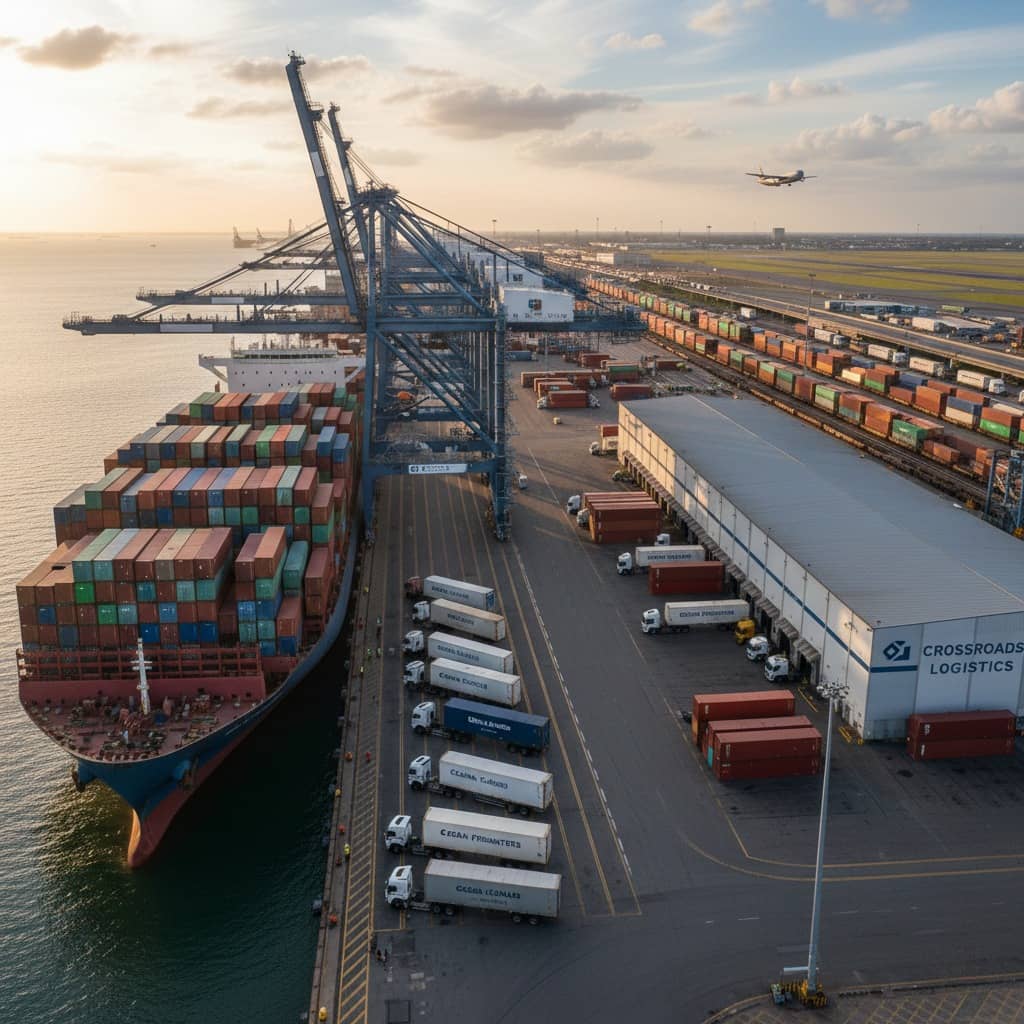
A GCP-native fleet tracking and dispatch system with sub-minute GPS update frequency, automated driver assignment, and predictive maintenance alerts from vehicle telemetry.
Explore this solutionA modern WMS on GCP with barcode/RFID scanning, AI-driven slotting optimization by velocity, wave planning, and real-time inventory accuracy — integrates with conveyor and robotics systems via standard APIs.
Explore this solutionDynamic dispatch engine paired with an offline-capable driver app — proof of delivery, electronic signatures, real-time ETA calculation, and customer notifications over a single event-driven backend.
Explore this solutionAn end-to-end visibility platform aggregating data from multiple carriers, suppliers, and warehouses via a standardised API gateway — exception alerting, SLA monitoring, and ML-based ETA prediction in one dashboard.
Explore this solutionOur Process
A structured engagement model built for the operational complexity and integration requirements of logistics businesses.
We map your current workflows, integration landscape, and pain points with your operations and IT teams to define the right solution scope.
Our architects design the system blueprint — data flows, carrier integrations, real-time tracking infrastructure, and scalability plan.
Two-week sprints delivering working software. Core tracking and dispatch features first, then analytics and optimization layers.
End-to-end integration testing with carriers, ERPs, and existing systems. Load testing to validate performance at peak volumes.
Phased rollout starting with a pilot region or depot. Full team training, runbooks, and 90-day hypercare support included.
Use Cases
From fleet optimization to warehouse automation, see the specific problems we solve for logistics businesses.
Fleet Management
Replace spreadsheet-based dispatch with intelligent fleet management that tracks every vehicle in real time, automates driver assignments, and optimizes routes dynamically.
Technology Stack
We build on proven, enterprise-grade technology — and integrate with the systems you already run.


FAQ
Everything you need to know about modernizing your logistics and supply chain operations with SolveJet.
We build and modernize Transportation Management Systems (TMS), Warehouse Management Systems (WMS), Order Management Systems (OMS), fleet tracking platforms, and supply chain visibility tools. We also integrate with existing ERPs like SAP and Oracle.
AI improves logistics through demand forecasting (reducing overstock and stockouts), dynamic route optimization (cutting fuel costs and delivery times), predictive maintenance (preventing fleet breakdowns), and anomaly detection (flagging shipment delays before they escalate).
Yes. We build integration layers for FedEx, UPS, DHL, USPS, and regional carriers, as well as freight marketplaces, customs brokers, and port systems for international logistics operations. We architect abstraction layers so adding new carrier integrations doesn't require touching core platform logic.
We use event-driven architectures with message queues (Kafka, GCP Pub/Sub) and WebSocket connections to propagate GPS and shipment status updates to end users in near real-time. This approach handles high-frequency event volumes without the latency or cost of polling-based architectures.
A well-architected last-mile platform covers dynamic dispatch with real-time driver availability, an offline-capable driver mobile app, proof-of-delivery capture (photo and signature), customer SMS/email notifications with live tracking links, and failed delivery management with re-scheduling workflows.
"They don't force us to go their way; instead, they follow our way of thinking."
★★★★★Marek StrzelczykHead of New Products & IT, GS1 Polska